


The 2026 Winter Olympics ice hockey tournament was one of the biggest attractions of the Milano Cortina 2026 Winter Games, bringing together elite players, national teams and passionate supporters from around the world. Held in Italy from February 5 to February 22, 2026, the competition featured separate men’s and women’s tournaments, with both events offering intense rivalries and high-quality performances. The men’s competition was especially anticipated because National Hockey League (NHL) players returned to the Olympic stage for the first time since 2014, creating an opportunity to watch many of the world’s leading professional players represent their countries.
The tournament delivered dramatic knockout games and memorable championship finishes. The United States won gold in both the men’s and women’s competitions, while Canada earned silver in both events. Finland claimed men’s bronze, and Switzerland secured women’s bronze. These results made the competition particularly memorable for American hockey fans and demonstrated the depth of talent across international ice hockey. Understanding the schedule, teams, venues, tournament structure and final results helps readers appreciate why Olympic hockey remains one of the most closely followed winter sports.
What Were the 2026 Winter Olympics Ice Hockey Events?
Ice hockey was among the headline team sports at Milano Cortina 2026. The competition included two medal events: men’s ice hockey and women’s ice hockey. Both tournaments brought together national teams that had qualified through international competition and rankings, with the International Ice Hockey Federation (IIHF) overseeing the sport’s international framework.
The men’s tournament featured 12 teams, while the women’s competition included 10. Each side followed a tournament structure designed to balance preliminary group matches with elimination rounds. Teams needed to combine individual skill, tactical discipline, physical strength and reliable goaltending to progress toward the medal games.
Olympic ice hockey differs from regular professional league competition because players represent their countries rather than their clubs. This creates distinctive rivalries and gives athletes an opportunity to compete for one of the sport’s most prestigious international honours. The 2026 edition also attracted considerable attention because of the return of NHL participation in the men’s event, adding more world-class talent to an already competitive field.
2026 Winter Olympics Ice Hockey Schedule
The ice hockey programme began before the official opening ceremony of the Winter Games and continued until the final day of competition. The women’s tournament ran from February 5 to February 19, while the men’s tournament took place from February 11 to February 22.
The schedule included preliminary matches, qualification playoffs in the men’s tournament, quarterfinals, semifinals and medal games. These stages ensured that teams had to perform consistently before earning a chance to compete for gold. The women’s medal games were held on February 19, and the men’s gold-medal game concluded the hockey programme on February 22.
The following table summarises the main dates and stages of the competition.
| Date in 2026 | Competition stage | Event |
|---|---|---|
| February 5–10 | Preliminary round | Women’s ice hockey |
| February 11–15 | Preliminary round | Men’s ice hockey |
| February 16–18 | Elimination stages | Women’s and men’s knockout matches, according to schedule |
| February 17 | Qualification playoffs | Men’s tournament |
| February 18 | Quarterfinals | Men’s tournament |
| February 19 | Medal games | Women’s tournament |
| February 20 | Semifinals | Men’s tournament |
| February 21 | Bronze-medal game | Men’s tournament |
| February 22 | Gold-medal game | Men’s tournament |
The dates above provide a broad overview rather than a complete match-by-match fixture list. The women’s knockout stages and the men’s qualification rounds followed their respective competition formats, so fans looking for a particular team’s fixture should distinguish between group matches and elimination games.
Host Venues for Olympic Ice Hockey
Milan, Italy, served as the centre of Olympic ice hockey during the 2026 Winter Games. The organisers used two main venues to accommodate the tournament’s extensive schedule and the large number of participating teams.
The Milano Santagiulia Ice Hockey Arena was the principal venue, hosting important matches across the competition. The Milano Rho venue, part of the wider Milan ice hockey facilities, provided additional capacity for tournament games. Both venues were planned around international ice hockey requirements, supporting fast play, player safety and spectator viewing.
Hosting the competition in Milan also placed the sport in a major European city with transport connections, accommodation and access to other Olympic activities. For visiting supporters, the event offered the chance to combine live hockey with the wider atmosphere of Milano Cortina 2026. The facilities were particularly important during the knockout stages, when the stakes increased and the margin for error became smaller.
The use of two venues helped the organisers manage simultaneous matches and the needs of both tournaments. It also allowed the Olympic programme to accommodate men’s and women’s fixtures across a tightly scheduled period.
Men’s Ice Hockey Tournament: Teams and Format
The men’s tournament featured 12 national teams divided into three preliminary groups, with four teams in each group. Each team played the other teams in its group, and the results helped determine qualification and seeding for the elimination stages. The format gave every participant an opportunity to establish its position before the pressure of knockout hockey began.
The competing nations included Canada, the United States, Finland, Sweden, Slovakia, Czechia, Switzerland, Germany, Latvia, Denmark, France and host nation Italy. These teams represented a broad range of hockey traditions, from established medal contenders to sides seeking to make an impression against stronger-ranked opponents.
Canada entered the competition with a reputation for depth and attacking quality. The United States also arrived with a talented roster, while Finland and Sweden offered organised defensive systems and strong team structures. Slovakia and Czechia had the potential to challenge the leading nations, making the qualification rounds important for determining the eventual knockout matchups.
After the preliminary round, the tournament moved into qualification playoffs, quarterfinals and semifinals. Teams that won the decisive games advanced toward the medal matches, while losses ended their hopes of winning gold. This structure rewarded teams that could adapt quickly, manage pressure and deliver their best performances at the right moment.
Women’s Ice Hockey Tournament
Women’s ice hockey was another major highlight of the Winter Olympics. Ten national teams competed for the gold medal, bringing together experienced international players and emerging talent. The competition began on February 5 and ended with the medal games on February 19.
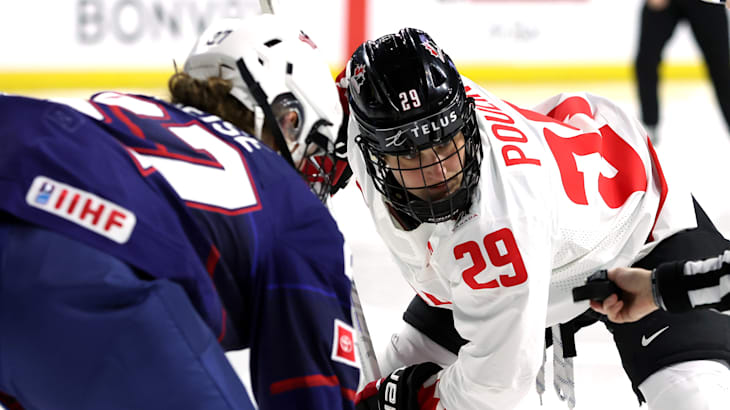
The United States and Canada remained the central rivals in women’s Olympic hockey. Their meetings are often characterised by speed, tactical awareness, skilled passing and outstanding goaltending. Both countries have developed strong women’s hockey programmes, and their rivalry has helped raise the sport’s international profile over several Olympic cycles.
Other nations also contributed to the tournament’s competitive character. Switzerland, Sweden and other European teams looked to challenge the North American powers through organised defence, effective transitions and disciplined special teams. Every game mattered because the preliminary standings influenced the route through the elimination rounds.
The women’s championship ultimately went to the United States, which defeated Canada 2–1 in overtime in the gold-medal game. Switzerland earned bronze, underlining its ability to compete with established powers. The result made the women’s final one of the defining moments of the 2026 Olympic hockey programme.
Final Medal Results
The final results of the men’s and women’s competitions provided a clear picture of the teams that performed best under Olympic pressure. Both gold-medal games ended with the United States defeating Canada by the same score, although each tournament had its own path to the championship.
| Event | Gold medal | Silver medal | Bronze medal |
|---|---|---|---|
| Men’s ice hockey | United States | Canada | Finland |
| Women’s ice hockey | United States | Canada | Switzerland |
The United States achieved a particularly notable result by winning both hockey tournaments. Canada’s two silver medals reflected its continued position among the leading international hockey nations, even though the team fell short in both championship games.
Finland secured third place in the men’s competition with a 6–1 victory over Slovakia in the bronze-medal game. Switzerland earned the women’s bronze after a closely contested tournament. These results also showed that Olympic success depends on more than individual star power: effective teamwork, defensive organisation and execution in high-pressure moments can determine the final standings.
NHL Stars and Players to Watch
One of the biggest talking points surrounding the 2026 Winter Olympics ice hockey tournament was the return of NHL players to the men’s Olympic competition. Their participation raised expectations because fans could watch leading professionals compete in an international setting rather than only in club hockey.
Canada featured experienced stars such as Sidney Crosby alongside elite players including Connor McDavid. Crosby returned to the Olympics after his gold-medal successes in 2010 and 2014, while McDavid made his Olympic debut at Milano Cortina 2026. The United States also brought considerable talent, including Auston Matthews and Matthew Tkachuk. Other international standouts included Sweden’s William Nylander, Germany’s Leon Draisaitl and Czechia’s David Pastrnak.
These players offered different strengths. Some were known for their scoring ability, others for playmaking, skating, defensive awareness or leadership. However, Olympic hockey places unusual demands on even the most accomplished athletes. Players have limited time to build chemistry with teammates from different club systems, and a single mistake can decide a knockout match.
Goaltenders were equally important. A goalkeeper who makes crucial saves during a tied game can shift the momentum of an entire tournament. Meanwhile, coaches must decide how to distribute ice time, manage special teams and respond to changing match situations. The combination of star power and collective discipline helped make the men’s tournament one of the most anticipated events of the Games.
How Olympic Ice Hockey Works
Understanding the rules makes it easier to follow the competition. Olympic ice hockey is played on an ice rink, with each team attempting to score by shooting a puck into the opposing team’s goal. Players use sticks to pass, carry and shoot the puck, while goaltenders protect the net.
A standard game consists of three periods of 20 minutes each. Teams can make substitutions during play, and coaches adjust their lines depending on the situation. Physical contact is permitted within the rules, but infractions can result in penalties that temporarily leave a team with fewer skaters.
Important aspects of the game include:
-
Power plays: A team may have a numerical advantage when an opponent is serving a penalty.
-
Penalty killing: The short-handed team attempts to defend effectively until its penalised player can return.
-
Overtime: Tied games can require additional play, with the format depending on the tournament stage.
-
Shootouts: Where specified by the competition rules, a shootout can decide a tied game after overtime.
-
Goaltending: Saves, rebound control and communication with defenders are crucial to preventing goals.
The exact overtime procedure varies by stage. In the 2026 men’s competition, preliminary games, quarterfinals, semifinals and medal games followed the applicable IIHF tournament regulations. Fans should therefore avoid assuming that every tied game uses the same overtime duration or format.
The Men’s Gold-Medal Final: United States vs Canada
The men’s final on February 22 delivered one of the most memorable finishes of Milano Cortina 2026. The United States defeated Canada 2–1 in overtime to claim the Olympic gold medal. The close score reflected the intensity of a matchup between two of the world’s strongest hockey programmes.
The final attracted enormous attention because the teams have a long history of high-stakes international competition. Canada brought exceptional offensive talent and experience, while the United States combined speed, physical commitment and disciplined defensive play. Both teams had to manage pressure carefully because a single goal could change the outcome.
The game remained competitive through regulation, and overtime ultimately decided the championship. Winning under these circumstances required composure, strong defensive coverage and the ability to capitalise on a decisive opportunity. For the American team, the victory represented a major international achievement. For Canada, the narrow defeat was a difficult ending to an otherwise strong tournament.
The United States’ 2–1 overtime victory also gave the men’s event a memorable conclusion on the final day of the Winter Games. Along with the women’s championship, it established the American teams as the leading medal winners in Olympic ice hockey in 2026.
Why the 2026 Tournament Was Significant
The 2026 Winter Olympics ice hockey competition was significant for several reasons. The return of NHL players to the men’s tournament was a major attraction, allowing international supporters to see elite professionals compete for national honours. This brought additional attention to rivalries between the United States, Canada, Sweden, Finland and other established hockey nations.
The competition also highlighted the continued development of women’s hockey. The women’s tournament offered a platform for national teams to demonstrate their progress and gave fans another chapter in the long-running United States–Canada rivalry. Switzerland’s bronze medal showed that teams beyond the traditional finalists could make a meaningful impact.
The event further demonstrated how tournament formats create opportunities for dramatic results. A team may dominate its preliminary group but still face a difficult opponent in the elimination rounds. Conversely, a side that builds momentum at the right time can outperform expectations. In knockout hockey, tactical flexibility, stamina and mental resilience matter as much as reputation.
For younger players and fans, the Olympics also provide an opportunity to learn about international hockey styles. Different countries bring their own approaches to skating, puck possession, forechecking and defensive positioning. Seeing these approaches meet on one stage makes Olympic competition valuable both as entertainment and as a showcase of the sport’s technical development.
How Fans Followed the Competition
Fans followed the tournament through television broadcasts, digital sports coverage, match reports and live score updates. Coverage typically included team lineups, goal scorers, penalty details, period-by-period scores and post-match analysis. These details helped viewers understand how games developed and why certain teams advanced through the competition.
For readers searching for the 2026 Winter Olympics ice hockey results, the final score alone does not always tell the whole story. Shot totals, special-teams performance, goalkeeper saves and goals scored during overtime can explain how a match was won. Reviewing the tournament’s complete results also makes it easier to compare teams across the preliminary and elimination rounds.
International fans needed to consider local broadcast arrangements and time differences when following matches in Italy. The competition’s February schedule meant some games took place at different times of day for audiences in North America, Europe and Asia. Match summaries and recorded coverage provided useful alternatives for people who could not watch every game live.
Key Takeaways From Olympic Ice Hockey 2026
The tournament offered several important lessons about elite international hockey:
-
The United States won both the men’s and women’s gold medals.
-
Canada finished second in both competitions.
-
Finland earned the men’s bronze medal, while Switzerland took bronze in the women’s event.
-
NHL participation made the men’s tournament particularly anticipated.
-
The men’s final ended with a 2–1 overtime victory for the United States over Canada.
-
Teamwork, defensive discipline and goaltending were essential throughout the elimination rounds.
These highlights summarise the most important outcomes without overlooking the broader achievements of the participating nations. Every team contributed to a tournament that showcased the speed, skill and competitive intensity of Olympic hockey.
Conclusion
The 2026 Winter Olympics ice hockey tournament in Milano Cortina delivered exciting international competition, world-class performances and dramatic medal games. The men’s and women’s events brought together leading national teams and demonstrated why ice hockey remains one of the most popular sports at the Winter Olympics.
The United States emerged as the standout nation by winning gold in both tournaments, defeating Canada in two closely contested championship games. Finland and Switzerland also earned recognition through their bronze-medal performances. Meanwhile, the return of NHL players to the men’s event added considerable interest and strengthened the tournament’s appeal to hockey fans worldwide.
From preliminary matches to decisive overtime goals, Milano Cortina 2026 provided memorable moments for players and supporters alike. Its results will remain an important part of Olympic hockey history, while the performances of established stars and emerging talents will continue to shape interest in international competition. For anyone researching the tournament, understanding its schedule, teams, venues, rules and medal results provides a complete overview of this major sporting event.

