


International cricket brings together teams with different histories, playing styles, and competitive strengths. Australia is one of the most successful cricket nations, recognised for its aggressive approach, disciplined bowling, and ability to perform under pressure. Ireland, meanwhile, has established itself as a determined international side capable of challenging stronger opponents through teamwork, smart tactics, and individual brilliance. Whenever these teams meet, the contest offers an opportunity to explore the differences between an experienced cricket powerhouse and an ambitious team continuing to strengthen its international reputation.
The Australia vs Ireland matchup attracts interest from fans who want to understand team combinations, batting depth, bowling options, match conditions, and potential turning points. Although Australia generally enters such contests with considerable international experience, Ireland has demonstrated that preparation and fearless cricket can make a difference against highly ranked opponents. The format, venue, pitch conditions, and availability of leading players all influence the likely balance of a match. Understanding these factors helps supporters appreciate the tactical decisions that shape the contest rather than judging the teams solely by reputation.
Understanding the Cricketing Strengths of Australia
Australia has built its cricketing identity around consistency, competitive intensity, and a strong winning mentality. Across Test cricket, One Day Internationals, and Twenty20 Internationals, Australian teams have traditionally combined technically accomplished batters with fast bowlers who can generate pace, bounce, and movement. Their approach often involves putting opponents under pressure early, maintaining scoring momentum, and exploiting weaknesses through carefully planned bowling changes. This combination has helped Australia remain a major force in international cricket across multiple generations.
Another important Australian strength is adaptability. The team can adjust its approach depending on whether the match requires patient batting, aggressive powerplay scoring, middle-over consolidation, or defensive bowling at the end of an innings. Experienced players often provide stability during difficult periods, while younger cricketers contribute athletic fielding and fresh tactical ideas. Against an opponent such as Ireland, Australia may be expected to control important phases, but complacency can create opportunities for the opposition. Strong execution, rather than reputation alone, remains essential to producing a convincing performance.
Ireland’s Progress and Competitive Approach
Ireland has developed a competitive international cricket programme through strong domestic structures, experienced international players, and a willingness to challenge established teams. Its cricketing strengths include determined batting, useful seam bowling, energetic fielding, and the ability to change tactics when conditions demand it. Players such as Paul Stirling, Harry Tector, Lorcan Tucker, and Josh Little have contributed to Ireland’s international profile through their performances in different formats. Their experience provides a foundation for younger players looking to establish themselves at the highest level.
Ireland’s approach against Australia requires a balance between ambition and discipline. The team must avoid losing wickets in clusters while still scoring quickly enough to remain competitive. Its bowlers also need to vary their pace, use changes of angle, and target the stumps when batters attempt aggressive shots. Ireland can benefit from exploiting small mistakes, particularly during the powerplay and the closing overs. A strong fielding display and partnerships in the middle order can help the side remain in contention even when facing an opponent with greater depth and experience.
Australia vs Ireland: Recent Match Result
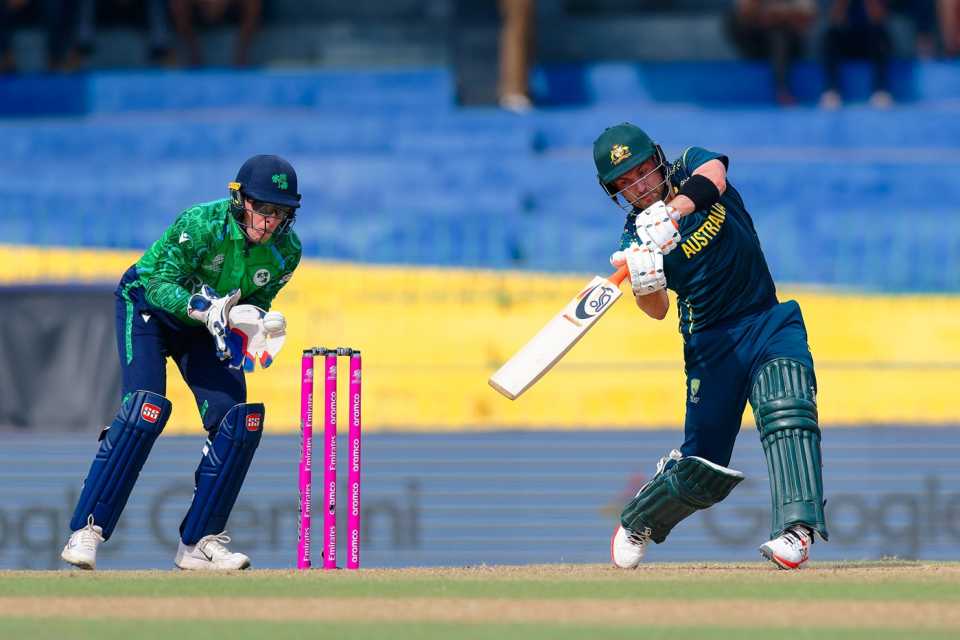
A useful recent example of this contest came during the ICC Men’s T20 World Cup on 11 February 2026 in Colombo. Australia scored 182 for six in 20 overs, while Ireland were dismissed for 115 in 16.5 overs, giving Australia a 67-run victory. Nathan Ellis and Adam Zampa each claimed four wickets, putting Ireland’s batting lineup under sustained pressure. George Dockrell scored 41, offering resistance during a difficult chase. Australia’s innings also benefited from contributions by Marcus Stoinis, Matt Renshaw, and Josh Inglis.
The result illustrated the importance of contributions throughout the lineup. Australia’s batters built a competitive total despite a late change involving captain Mitchell Marsh, with Travis Head leading the side. Ireland, meanwhile, suffered an early setback when captain Paul Stirling retired injured on the first ball of the chase. Early wickets then made the target considerably harder to reach. Although one match cannot explain every difference between the teams, this contest highlighted how batting depth, bowling accuracy, and the ability to respond to unexpected events can influence a T20 international.
Head-to-Head Record and Previous Meetings
The history of matches between these teams provides useful context for understanding their competitive relationship. Australia has won previous T20 World Cup meetings, including the 2022 contest in Brisbane, when it posted 179 for five and defeated Ireland by 42 runs. Aaron Finch scored 63, while Ireland’s Lorcan Tucker made 71 during the chase. Ireland showed that its batters could produce substantial individual performances, but Australia’s total and bowling execution proved decisive.
The 2026 encounter added another convincing Australian result to the recent T20 World Cup record. Nevertheless, head-to-head statistics should be interpreted carefully because the number of meetings, player availability, venue, and match format can vary. Test cricket rewards patience and endurance, ODIs require a balance between consolidation and acceleration, and T20s place greater emphasis on quick scoring and short, high-pressure spells. For supporters assessing future contests, historical results are useful indicators rather than guarantees of what will happen next.
Match Summary Table
The following table highlights two recent T20 World Cup encounters between the teams.
| Match detail | T20 World Cup 2022 | T20 World Cup 2026 |
|---|---|---|
| Venue | Brisbane | Colombo |
| Australia score | 179/5 | 182/6 |
| Ireland score | 137 all out | 115 all out |
| Result | Australia won by 42 runs | Australia won by 67 runs |
| Notable batting contribution | Aaron Finch: 63 | Marcus Stoinis: 45 |
| Key bowling contribution | Adam Zampa took 2 wickets | Nathan Ellis and Adam Zampa took 4 wickets each |
Sources: match records and reports for the 2022 and 2026 T20 World Cup fixtures.
Key Players to Watch
Individual performances can change the direction of an international match, particularly in T20 cricket, where a few overs may determine the result. Australia’s selection options often include powerful top-order batters, versatile middle-order players, fast bowlers, and specialist spinners. The most influential players depend on the squad selected for a particular fixture, so supporters should distinguish between established names and confirmed playing XI members.
Ireland also possesses players who can make an impact with either bat or ball. Its experienced batters are important for building partnerships, while its seamers can create pressure through movement and changes of pace. The following players illustrate the different roles that may shape a contest.
-
Travis Head: An aggressive batter capable of putting pressure on bowlers during the opening overs.
-
Josh Inglis: A wicketkeeper-batter who can accelerate the scoring rate and attack gaps in the field.
-
Marcus Stoinis: A versatile all-rounder who can contribute with powerful batting and useful medium-pace bowling.
-
Adam Zampa: A specialist leg-spinner who can control the middle overs and create wicket-taking opportunities.
-
Paul Stirling: An experienced Irish batter whose aggressive approach can provide a strong start.
-
Harry Tector: A technically capable batter who can help Ireland rebuild after early wickets.
-
Lorcan Tucker: A wicketkeeper-batter known for his ability to score quickly and counterattack.
-
Josh Little: A left-arm fast bowler who offers variation and wicket-taking potential.
These names are examples of players to follow rather than a confirmed lineup for a future match. Fitness, squad selection, recent form, and conditions can all influence which individuals become central to the contest.
Batting Strategies and the Importance of Partnerships
Batting strategy is one of the most interesting aspects of Australia versus Ireland. Australia’s depth allows its batters to pursue an attacking approach while retaining options for the final overs. A strong opening partnership can establish momentum, while middle-order players can consolidate after early wickets or increase the scoring rate when the platform is secure. In T20 cricket, effective running between the wickets is just as important as boundary hitting because it prevents bowlers from settling into predictable patterns.
For Ireland, partnerships are particularly important when facing an experienced bowling attack. Losing two or three wickets early can force the remaining batters to take risks before they are properly established. A more measured approach, followed by calculated aggression, may help the team remain competitive. Batters should identify scoring opportunities against different bowlers, rotate the strike, and avoid repeatedly attempting low-percentage shots. If Ireland can maintain wickets through the middle overs, it may be better positioned to challenge Australia’s bowlers at the end of the innings.

Bowling Tactics and Fielding Performance
Bowling plans need to reflect the pitch, weather, batter tendencies, and match situation. Australia’s pace attack can use hard lengths, changes of speed, and yorkers to restrict scoring opportunities. Spinners can become especially valuable when the surface offers grip or when batters struggle to generate power against slower deliveries. The key is to maintain control without becoming too predictable, because aggressive batters can exploit repeated lengths and poorly executed variations.
Ireland must also make effective use of its bowling resources. Early wickets can limit Australia’s scoring potential, but the fielding side needs to back its bowlers with reliable catching and sharp ground fielding. In T20 cricket, saving even a handful of runs can be meaningful, particularly in close finishes. Bowling changes should respond to matchups rather than follow a rigid plan. Both teams must also minimise wides, no-balls, misfields, and dropped catches, as these mistakes give opponents opportunities to recover from difficult situations.
How Pitch and Weather Conditions Can Influence the Match
Conditions can significantly alter the balance between bat and ball. On a hard surface with consistent bounce, Australia’s stroke-makers may find it easier to attack through the off side and straight down the ground. A slower pitch can reward batters who use placement, sweep shots, and quick running rather than relying entirely on power. Spin may become more influential when the surface provides grip, while seam movement can help fast bowlers if there is moisture or cloud cover.
Weather also matters, particularly when rain threatens to shorten a limited-overs match. Reduced overs change the required scoring rate and may encourage batters to attack earlier than planned. Dew can affect how comfortably bowlers grip the ball during evening games, although its impact varies by venue. Supporters following a fixture should consider the official match conditions, toss, and confirmed playing XIs before making predictions. A team’s reputation is important, but conditions and execution often determine how well its strengths translate onto the field.
What Cricket Fans Should Watch During the Match
For anyone following Australia versus Ireland, the most informative approach is to watch how each team handles the major phases of the innings. The opening overs often reveal whether the batters can control the new ball, while the middle overs show how effectively the bowling side limits partnerships. The final overs then test a team’s ability to accelerate or defend a target under pressure.
Several match indicators can help fans understand the contest:
-
Powerplay wickets: Early dismissals can disrupt the batting plan and reduce scoring options.
-
Run rate: A steady scoring rate helps a batting side maintain control of the required target.
-
Middle-over control: Dot balls and wickets can prevent batters from building momentum.
-
Bowling economy: Restricting boundaries can increase pressure on the chasing team.
-
Partnerships: Sustained partnerships allow batters to recover from setbacks and build a competitive total.
-
Fielding standards: Catches, run-outs, and boundary saves can influence the result.
-
Death-over execution: Yorkers, slower balls, and smart shot selection often determine the final margin.
Watching these details provides a clearer understanding of why a team gains or loses control during a match.
Why This Contest Matters to International Cricket
Matches between established teams and ambitious challengers contribute to the broader development of international cricket. Australia brings extensive experience in major tournaments, high-pressure situations, and varied playing conditions. Ireland benefits from opportunities to test its players against strong opposition, assess its tactical approach, and identify areas for improvement. These encounters can also provide valuable experience for younger cricketers who are developing their roles within the national side.
For supporters, the appeal lies in the possibility of contrasting approaches producing an entertaining game. Australia’s aggressive batting and broad bowling options may give it an advantage, while Ireland can compete through discipline, adaptability, and individual performances. The result is not simply a measure of rankings; it also reflects preparation, teamwork, and how well players respond when a match changes direction. Consistent performances in international fixtures help both sides build experience and prepare for future competitions.
Conclusion
Australia and Ireland offer an interesting contrast in international cricket, combining Australia’s established reputation with Ireland’s determination to compete against leading teams. Recent T20 World Cup encounters have favoured Australia, including its 67-run victory in Colombo in February 2026. That result demonstrated the value of a competitive batting total, accurate bowling, and the ability to take wickets at crucial moments.
The broader lesson is that successful cricket depends on more than individual talent. Partnerships, tactical flexibility, fielding discipline, and performance under pressure all contribute to the final outcome. Australia may enter future meetings as the stronger side on paper, but Ireland will look for opportunities to challenge that advantage through careful planning and confident execution. For fans, the Australia vs Ireland rivalry remains a useful contest to follow when assessing team strategies, player performances, and the unpredictable nature of international cricket.

