


The Chennai Super Kings vs Sunrisers Hyderabad match scorecard provides a detailed overview of batting performances, bowling figures, partnerships, wickets, and the final result of an exciting Indian Premier League contest. These two franchises have developed a competitive rivalry, with Chennai Super Kings (CSK) traditionally relying on experience, tactical planning, and spin bowling, while Sunrisers Hyderabad (SRH) have often built their approach around aggressive batting and disciplined pace bowling.
In their IPL 2026 meeting on 18 May at the MA Chidambaram Stadium in Chennai, Sunrisers Hyderabad defeated Chennai Super Kings by five wickets. Chennai scored 180/7 in 20 overs, but Hyderabad chased the target successfully, reaching 181/5 in 19 overs. Ishan Kishan played a decisive innings of 70 runs from 47 balls and earned Player of the Match recognition. This result highlighted SRH’s ability to handle a challenging chase away from home. The following article examines the scorecard, important individual contributions, bowling performances, and key lessons from the contest.
Chennai Super Kings vs Sunrisers Hyderabad Match Scorecard Overview
The match featured an entertaining contest between Chennai’s batting lineup and Hyderabad’s run chase. CSK aimed to establish a competitive total after winning the toss and choosing to bat first. Their innings included several useful contributions, although the team could not maintain a consistent scoring rate throughout all 20 overs.
Sunrisers Hyderabad responded with a positive approach. Their batters combined attacking strokes with important partnerships to remain within reach of the target. Although Chennai took five wickets during the chase, SRH maintained sufficient momentum to complete the match with six balls remaining. The final margin of five wickets reflected the visitors’ effective batting performance under pressure.
| Match detail | Information |
|---|---|
| Tournament | Indian Premier League 2026 |
| Match date | 18 May 2026 |
| Venue | MA Chidambaram Stadium, Chennai |
| Chennai Super Kings | 180/7 in 20 overs |
| Sunrisers Hyderabad | 181/5 in 19 overs |
| Match result | SRH won by 5 wickets |
| Player of the Match | Ishan Kishan |
| Toss | CSK elected to bat |
Chennai Super Kings Batting Performance
Chennai Super Kings finished with 180 runs for seven wickets, giving their bowlers a competitive total to defend. The innings featured contributions from several batters, but the team needed a stronger collective effort to put the visitors under greater pressure. Sanju Samson started aggressively, scoring 27 from just 13 deliveries, including five fours and a six. His quick start helped Chennai establish early momentum.
Kartik Sharma added 32 runs from 19 balls, striking three fours and two sixes. Dewald Brevis was another important contributor, scoring 44 from 27 deliveries with two fours and four sixes. His innings provided Chennai with valuable middle-order acceleration. Shivam Dube contributed 26 from 23 balls, while Urvil Patel and Prashant Veer offered additional runs. However, wickets at important moments prevented CSK from building an even bigger total.
The Chennai innings demonstrated the value of aggressive stroke play but also exposed the importance of sustained partnerships. A stronger finish during the final overs could have increased the required rate and placed greater pressure on Hyderabad’s batters. Nevertheless, 180 was a total that gave Chennai a reasonable opportunity to compete, provided their bowlers made early breakthroughs.
Chennai Super Kings Batting Scorecard
| Batter | Runs | Balls | Fours | Sixes |
|---|---|---|---|---|
| Sanju Samson | 27 | 13 | 5 | 1 |
| Ruturaj Gaikwad | 15 | 21 | 0 | 0 |
| Urvil Patel | 13 | 8 | 0 | 2 |
| Kartik Sharma | 32 | 19 | 3 | 2 |
| Dewald Brevis | 44 | 27 | 2 | 4 |
| Shivam Dube | 26 | 23 | 3 | 1 |
| Prashant Veer | 11 | 9 | 2 | 0 |
| Akeal Hosein | 3* | 1 | 0 | 0 |
| Extras | 9 | — | — | — |
| Total | 180/7 | 20 overs | — | — |
Note: Batting figures are presented for the principal contributors. The remaining players did not bat, and extras are included in the team total.
Sunrisers Hyderabad Bowling Performance
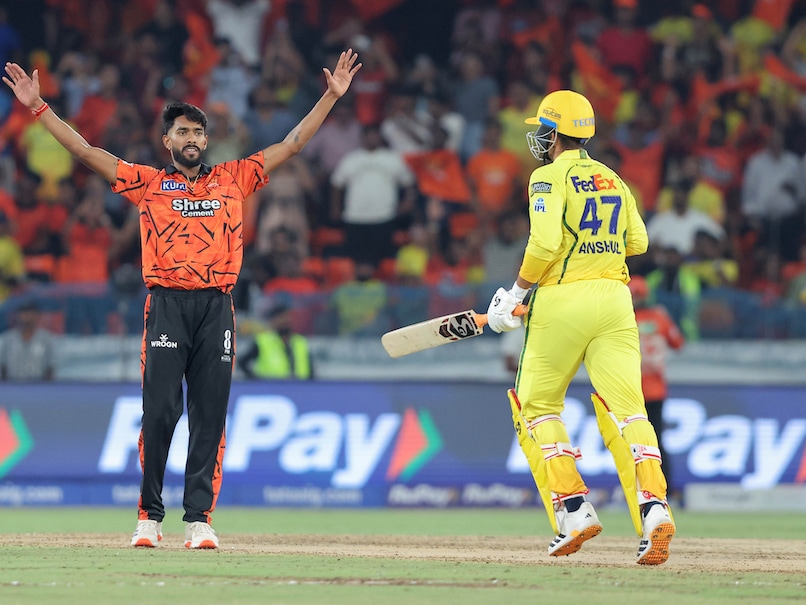
Sunrisers Hyderabad’s bowlers played an important role in restricting Chennai to 180 runs. Pat Cummins delivered a particularly influential spell, dismissing Sanju Samson, Ruturaj Gaikwad, and Kartik Sharma. His ability to remove key batters prevented CSK from maintaining uninterrupted momentum and helped Hyderabad control the innings during important periods.
Sakib Hussain also made valuable contributions by dismissing Urvil Patel and Shivam Dube. Eshan Malinga removed Dewald Brevis, whose innings had threatened to push Chennai towards a substantially higher score. Praful Hinge picked up the wicket of Prashant Veer, helping Hyderabad restrict the lower order.
The bowling performance showed how wickets can be as important as economy rate in a high-scoring T20 match. Rather than allowing Chennai’s middle order to build a long partnership, SRH repeatedly interrupted the innings. Their bowlers combined pace, variations, and timely breakthroughs to keep the final total within a chaseable range. This proved particularly important because Hyderabad’s batting lineup subsequently needed to score at more than nine runs per over for much of the chase.
Sunrisers Hyderabad Batting Performance
Sunrisers Hyderabad approached the target with the intention of keeping the required run rate under control while taking advantage of scoring opportunities. Their innings reached 181/5 in 19 overs, completing the chase with one over remaining. The performance demonstrated the importance of balancing attacking intent with the need to preserve wickets.
Ishan Kishan was the standout batter, scoring 70 runs from 47 deliveries. His innings provided stability after Hyderabad lost wickets during the chase and helped the team remain on course. By combining boundary hitting with regular scoring between the wickets, Kishan reduced the pressure on the incoming batters.
The supporting contributions were also important. Travis Head and Abhishek Sharma provided the opening partnership, while Heinrich Klaasen and Nitish Kumar Reddy contributed during the middle overs. Although Chennai managed to dismiss five SRH batters, Hyderabad maintained enough scoring momentum to finish the match successfully. The result demonstrated that a successful T20 chase does not always require one batter to score at an extraordinary rate throughout the innings; a well-timed combination of partnerships and individual contributions can be equally effective.
Sunrisers Hyderabad Batting Scorecard
| Batter | Runs | Balls |
|---|---|---|
| Travis Head | 12 | — |
| Abhishek Sharma | 25 | — |
| Ishan Kishan | 70 | 47 |
| Heinrich Klaasen | 23 | — |
| Nitish Kumar Reddy | 20 | — |
| Salil Arora | 10 | — |
| Smaran Ravichandran | 5* | 2 |
| Extras | 6 | — |
| Total | 181/5 | 19 overs |
Key Moments That Influenced the Match
Several moments shaped the outcome of this encounter. The first was Chennai’s inability to convert its useful starts into a substantially larger total. Samson, Kartik Sharma, and Brevis all contributed at healthy scoring rates, but Hyderabad’s bowlers continued to take wickets at important stages. That prevented Chennai from building the kind of late-innings surge that can make a target difficult to chase.
The second major moment was Pat Cummins’ impact with the ball. His wickets disrupted Chennai’s batting plans and helped limit the home team’s scoring opportunities. Sakib Hussain and Eshan Malinga also provided crucial breakthroughs, ensuring that Chennai could not depend on a single partnership to dominate the innings.
Ishan Kishan’s innings became the defining contribution of the chase. His 70 runs gave Hyderabad a dependable foundation, particularly when wickets fell around him. The visitors also benefited from contributions by their supporting batters, who helped maintain the required scoring rate. Together, these moments explain why Hyderabad managed to complete the chase despite losing five wickets.
Chennai Super Kings Bowling Analysis
Defending 180, Chennai needed early wickets and consistent control during the powerplay. The bowlers had to prevent Hyderabad’s opening batters from establishing a quick scoring rhythm and then apply pressure through the middle overs. However, SRH managed to build enough momentum to keep the target within reach.
Chennai’s challenge was not simply to take wickets but to combine breakthroughs with economical overs. In T20 cricket, a team can remain competitive after losing wickets if the remaining batters continue scoring at a healthy rate. Hyderabad demonstrated that approach during this chase.
For CSK, the match offered several tactical lessons. Bowlers need to vary their pace, use the field intelligently, and avoid predictable lengths when batters are looking to attack. Defending a target also requires a clear plan for the opposition’s strongest players. Kishan’s substantial contribution showed how one well-established innings can change the direction of a chase.
Head-to-Head Record and Team Rivalry
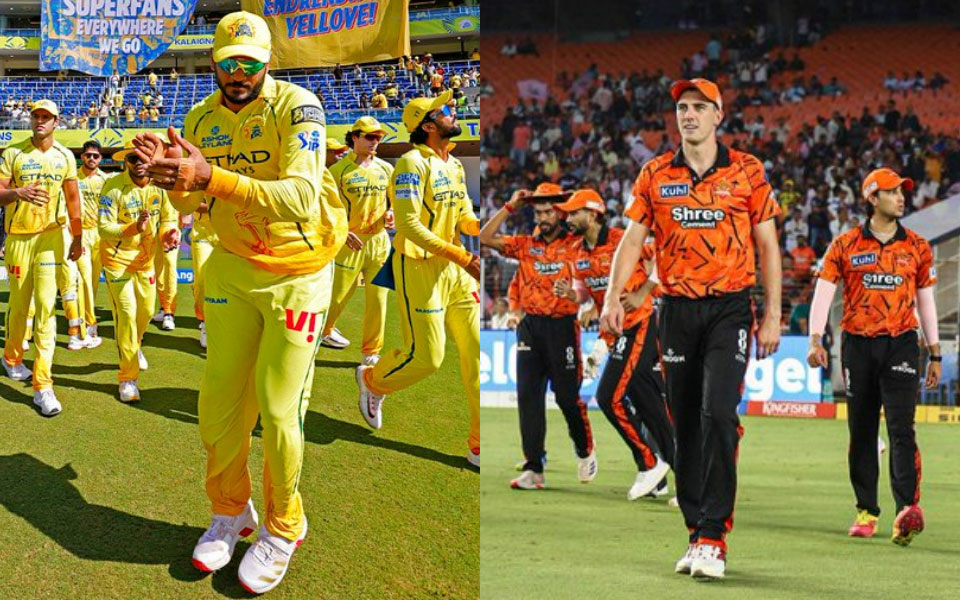
Chennai Super Kings and Sunrisers Hyderabad have produced several memorable IPL contests. Chennai have historically held an advantage in their head-to-head record, although Hyderabad have delivered important victories in recent seasons. Their rivalry brings together two different approaches to T20 cricket: Chennai’s emphasis on tactical experience and Hyderabad’s capacity for aggressive run scoring.
Their 2026 meetings illustrated that the outcome can depend heavily on conditions, individual form, and execution on the day. In the April 18 encounter, Hyderabad defeated Chennai by 10 runs after posting 194/9 against CSK’s 184/8. In the May 18 rematch, Hyderabad again emerged victorious, this time chasing 181 to win by five wickets. These results underlined SRH’s ability to challenge Chennai in both high-scoring contests and successful run chases.
Head-to-head statistics provide useful historical context, but they cannot determine the result of a future match. Team combinations change, players experience fluctuations in form, and pitch conditions can influence the balance between batting and bowling. For this reason, readers should consider historical results alongside recent performances when analysing future CSK versus SRH fixtures.
Pitch Conditions and Their Influence
The MA Chidambaram Stadium in Chennai is often associated with conditions that can assist spin bowling, although the nature of the surface varies from match to match. In this contest, the scoring pattern demonstrated that batters could still produce substantial contributions when they found the right balance between placement, timing, and aggression.
Chennai’s total of 180/7 was competitive, but Hyderabad’s successful chase showed that the surface allowed consistent scoring. The ability to rotate the strike was particularly valuable because it prevented the required run rate from becoming unmanageable. Batters who relied exclusively on boundaries would have faced greater pressure whenever the bowlers delivered effective overs.
The pitch also influenced the teams’ tactical choices. Chennai needed to defend the total through disciplined bowling, while Hyderabad had to identify scoring opportunities without losing too many wickets. The eventual result showed that adapting to conditions is just as important as relying on a team’s traditional playing style.
Important Statistics From the Match
The following statistics summarise the major features of the contest and explain how Hyderabad secured the victory.
| Statistic | Match figure |
|---|---|
| CSK first-innings total | 180/7 |
| SRH second-innings total | 181/5 |
| Highest individual score | Ishan Kishan, 70 |
| CSK’s leading scorer | Dewald Brevis, 44 |
| CSK’s second-highest scorer | Kartik Sharma, 32 |
| Notable bowling performance | Pat Cummins took three wickets |
| Successful chase | SRH reached the target in 19 overs |
| Winning margin | Five wickets |
| Player of the Match | Ishan Kishan |
These numbers reveal the importance of contributions across different phases of the game. Chennai received valuable runs from its middle order, while Hyderabad benefited from Kishan’s innings and a successful collective chase. Cummins’ three wickets were significant, but the final result ultimately favoured the side that managed the target more effectively.
What Fans Can Learn From the Scorecard
A cricket scorecard is more than a record of runs and wickets. It helps readers understand how a match developed, which players influenced key moments, and where a team might have lost its advantage. The Chennai Super Kings vs Sunrisers Hyderabad match scorecard is a useful example because both teams produced notable individual performances, yet their results differed because of how they handled the crucial phases.
Fans analysing the contest should consider these points:
- Batting partnerships: A collection of quick starts does not always replace one or two sustained partnerships.
- Middle-over control: Bowlers who take wickets during this phase can restrict the opposition’s final total.
- Chase management: Regular scoring helps batters avoid excessive pressure in the final overs.
- Individual impact: Kishan’s 70 runs were central to Hyderabad’s successful chase.
- Finishing ability: Teams need to maximise scoring opportunities in the final overs of the first innings.
- Tactical flexibility: Captains must adjust bowling plans according to the batters at the crease and the match situation.
These lessons apply to many T20 matches and help readers understand why the highest-scoring team in an individual phase does not necessarily control the final outcome.
Conclusion
The Chennai Super Kings vs Sunrisers Hyderabad match scorecard captures a contest in which Chennai posted a competitive total but Hyderabad delivered the more successful overall performance. CSK finished at 180/7, with Dewald Brevis scoring 44 and Kartik Sharma adding 32. Pat Cummins’ three wickets helped SRH limit the home side’s progress.
Hyderabad responded with 181/5 in 19 overs, completing a five-wicket victory. Ishan Kishan’s 70-run innings proved decisive, while the supporting batting contributions kept the chase moving forward. The result highlighted the importance of partnerships, timely wickets, and controlled aggression in T20 cricket.
For readers following the IPL, this match provides a valuable example of how a strong individual performance can influence a close contest. Analysing the batting figures, bowling contributions, and match progression offers a clearer understanding of the result than looking at the final scores alone.