


AUS vs IND T20 contests are among the most closely followed matchups in international cricket. Australia and India bring different strengths to the shortest format, creating games where momentum can change within a few overs. Australia traditionally combines pace, aggressive batting, athletic fielding, and strong tactical awareness, while India often offers a deep batting lineup, varied bowling options, and several players capable of changing the game quickly.
T20 cricket leaves little room for slow starts or extended recovery periods. A team can dominate for 15 overs and still lose because of an expensive final over or a spectacular batting display. This makes every Australia-India encounter particularly interesting for fans who want to understand more than just the final score.
Understanding the AUS vs IND T20 Rivalry
The rivalry between these two cricketing nations extends across Tests, ODIs, and T20 internationals. However, the T20 format introduces a different tactical environment. There are fewer deliveries available, so captains must make decisions quickly and players are expected to contribute immediately.
An AUS vs IND T20 match can feature contrasting approaches. Australia may look to attack with pace and use aggressive field settings, particularly during the powerplay. India can counter that approach with technically strong batters who rotate the strike while targeting favorable matchups.
The rivalry also carries significance because both teams regularly compete in major international tournaments. Their meetings can therefore have consequences beyond individual bragging rights, including qualification scenarios, knockout positioning, and tournament momentum.
Key Factors That Can Influence the Match
Several elements can determine the direction of a T20 international. Unlike longer formats, a single spell or short batting partnership can have an outsized effect.
| Match Factor | Why It Matters |
|---|---|
| Powerplay batting | Establishes the scoring rate and protects wickets |
| Middle overs | Determines whether momentum is maintained |
| Death bowling | Can restrict runs during the highest-scoring phase |
| Pitch conditions | Influences pace, bounce, grip, and shot selection |
| Toss decision | May affect whether teams prefer chasing or defending |
| Fielding | Saves runs and creates opportunities through pressure |
| Matchups | Individual player battles can change tactical plans |
Conditions deserve particular attention. Australian venues can offer pace and bounce, while some surfaces may become easier for batting as the innings develops. Indian pitches can vary considerably, with some favoring stroke play and others giving spinners greater influence.
Batting Strategies in the Shortest Format
Top-order batting is especially important in an AUS vs IND T20 encounter because the opening overs provide fielding restrictions. Batters can exploit the gaps inside the circle, but attacking too aggressively can result in early wickets.
A successful opening partnership does not necessarily require constant boundary hitting. Smart running between wickets can maintain pressure while preserving wickets for the middle and final overs.
The middle order then becomes responsible for converting a good platform into a competitive total. Players who can attack spin, manipulate the field, and accelerate without taking unnecessary risks are extremely valuable.
The final overs usually demand a different style. Batters must identify scoring areas quickly, while bowlers attempt to limit boundary opportunities through yorkers, slower deliveries, wide lines, and changes of pace.
Bowling Battles and Tactical Matchups
Bowling is often where T20 matches are won or lost. A strong bowling unit needs different skills for different phases rather than relying entirely on one type of bowler.
During the powerplay, fast bowlers can attempt to exploit movement and bounce. Their primary objective is often to prevent the batting side from building an easy foundation.
The middle overs provide opportunities for spin and variations in pace. This phase is particularly important because captains can use specific bowlers against particular batters. A spinner facing an aggressive left-hander, for example, may require a different field and bowling angle than when facing a right-hander.
At the end of the innings, death bowling becomes crucial. Even two or three well-executed overs can dramatically change the final total. Conversely, missed yorkers or poorly placed slower balls can produce a rapid flow of boundaries.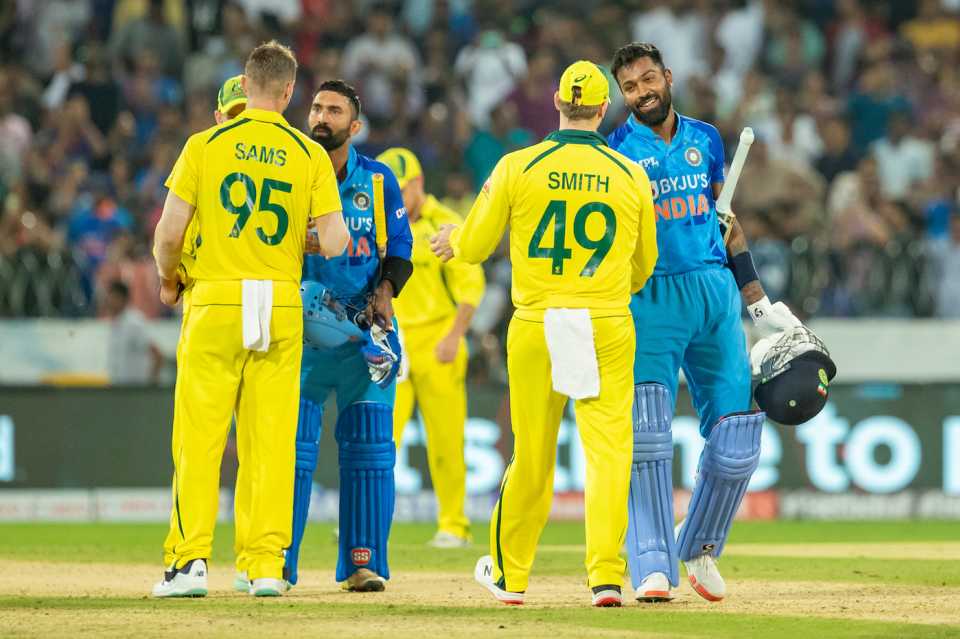
Players Who Can Change the Game
An AUS vs IND T20 game can turn quickly because both sides generally possess players capable of contributing in multiple areas. A batter can win a match with a short burst of scoring, while a bowler can change the result with two wickets in consecutive deliveries.
India’s depth often allows the team to select combinations suited to different conditions. Batters who can play both conventional and innovative shots provide flexibility, while all-rounders give the captain additional bowling and batting options.
Australia similarly benefits from players accustomed to high-pressure cricket. Their fast bowlers can create problems with bounce and pace, while their middle-order batters can be particularly dangerous when given freedom to attack.
Rather than focusing only on famous names, it is useful to watch players whose specific roles match the conditions. A specialist death bowler, powerplay wicket-taker, or reliable finisher may have greater influence than a headline player on a particular day.
Powerplay: The First Major Battle
The opening six overs can establish the tone of an AUS vs IND T20 match. Because only a limited number of fielders can be positioned outside the inner circle, batsmen have more opportunities to find boundaries.
However, powerplay success should not be judged solely by the number of runs scored. Retaining wickets can be equally important because a team with several wickets in hand can attack more aggressively later.
For bowlers, disciplined lines and lengths are essential. Creating uncertainty can force batters into risky shots. A single early wicket may also alter the batting team’s planned approach and bring a less-set batter to the crease.
Middle Overs: Where Strategy Takes Over
The middle overs are often less spectacular but extremely important. This is where captains use matchups, field changes, bowling rotations, and tactical variations to control momentum.
Batters need to avoid long periods without boundaries while still protecting wickets. Rotating the strike becomes particularly valuable against disciplined bowlers.
For the bowling team, dot balls can create pressure even without immediate wickets. When several deliveries produce no runs, the batter may feel compelled to attempt a higher-risk shot. That pressure can eventually create a breakthrough.
The Importance of the Final Five Overs
The closing stages can redefine the entire contest. A team sitting on a moderate score after 15 overs can suddenly add a substantial number of runs through aggressive batting.
Death overs require clear plans. Batters generally look for predictable scoring zones, while bowlers try to make clean contact difficult. Yorkers, slower balls, wide deliveries, and carefully protected boundary areas can all be part of the strategy.
Fielding also becomes more important because every saved boundary can influence the final margin. A sharp catch or direct hit during this period may prove as valuable as a wicket taken earlier.
How Conditions Affect AUS vs IND T20 Matches
Weather, pitch behavior, boundaries, and dew can all influence tactical decisions. A captain may choose to chase if the surface is expected to become easier for batting later, while another situation may encourage defending a total.
Pitch pace is particularly significant. On a fast surface, batters can use the bounce to generate power, while bowlers can attack with hard lengths. On slower pitches, timing can become more difficult and spinners or cutters may become more effective.
Dew can also influence the second innings at some venues. A wet ball may make gripping it harder for bowlers and fielders, potentially affecting the effectiveness of spin and slower deliveries.
What Fans Should Watch During the Match
Instead of concentrating only on boundaries and wickets, viewers can follow several tactical indicators:
- Which team controls the powerplay?
- How effectively do batters rotate the strike?
- Which bowlers are used against specific batters?
- How quickly does the scoring rate change after the tenth over?
- Which side handles pressure during the final overs?
These details provide a better understanding of why momentum shifts during a T20 game. They also make the match more engaging because individual decisions become easier to recognize.
Conclusion
AUS vs IND T20 cricket combines high-quality players, contrasting strategies, and intense pressure within a very short playing window. The outcome can depend on powerplay execution, middle-over control, death bowling, fielding quality, and how effectively each team responds to changing conditions.
For fans, the most interesting aspect is that there is rarely one guaranteed path to victory. A strong start can help, but disciplined middle overs and effective finishing remain essential. Likewise, an early setback does not automatically decide the contest because T20 cricket provides several opportunities for a team to recover.
Understanding these tactical elements makes every Australia-India encounter more than a simple battle of runs and wickets. It becomes a contest of planning, adaptability, execution, and composure, which is exactly what makes this rivalry so compelling in international T20 cricket.

